

For about a month, many of us organized our evenings around men we've never met kicking a ball. The World Cup pulls billions of people into the same story at the same time, and for a few weeks, a country that usually watches a thousand different screens looked at the same one.
I should confess that it mostly pulled without me. Soccer isn't my thing; I watched almost none of the matches and couldn't have told you who reached the final without looking it up. What caught me was the marketing around the games. And that's its own kind of tell: if a campaign can reach the guy who skipped the tournament, it's worth asking how.
Most of the roundups you'll read are scorekeeping: who won the meme war, whose celebrity spot was slickest. A more useful question kept surfacing for anyone in a mission-driven space: what did each activation assume about the people it was reaching? That assumption shows up before the product does. The ones that broke through treated fans as people already in the middle of something and looked for the way in. The weaker campaigns treated them as an audience waiting to be handed a message. Four are worth sitting with. So is the one that missed.
Give People Something to Do

The clearest example came from a bank, which is not a sentence I expected to write. Bank of America handed out free beaded bracelets, dubbed "Fan Bands," 140 collectible beads styled after host cities and national colors. No app, no story to sit through. By the knockout rounds, demand was high enough they built a timed-reservation system, and more than two million went out.
The bracelet's real work was in what it let people do: wear it, compare it, trade a Mexico City bead for a Dallas one, show up already belonging to something. That was already what fans wanted from the tournament; the bracelet just gave it somewhere to live.
For anyone who builds campaigns, the instinct is to ask, "What do we want to say?" The more useful question is usually, "What do we want people to do together?" A message asks for agreement. A role invites participation, and participation is what people remember. A faith-space version showed up in Victory Beyond the Cup, which equipped some 100,000 Christians and 10,000 churches to host watch parties, built by Gloo's Church Engagement team, so I'm not a neutral observer. But the design is the point: it gave believers a role on a night the neighborhood was already watching.
Let a Constraint Do the Work

My favorite thing all month happened by accident. FIFA requires every venue be scrubbed of any brand that didn't pay to be there, so Levi's Stadium was renamed and its logos draped in plain sheets. The trouble is the batwing logo has a shape, and the sheets kept it. So Levi's leaned in. They swapped their Instagram profile picture for the covered-up version and put the same white sheet on storefronts in Paris, London, and Mexico. Heinz sold a blacked-out bottle it called the Unofficial Stadium Ketchup; Gillette covered its logo with fake shaving foam. None of them paid FIFA a dollar, and all of them out-talked the sponsors who paid tens of millions.
A covered logo turned out to be more interesting than an uncovered one; the constraint made people lean in and finish the picture themselves.
None of this is new. In 1985, ad man George Lois launched a then-unknown designer with a single billboard design of a hangman puzzle listing the initials of three giants (Ralph Lauren, Perry Ellis, Calvin Klein) and a fourth blank for Tommy Hilfiger. Overnight, "Who the heck is Tommy Hilfiger?" was the question in New York. As the story goes, when Calvin Klein griped that his own fame had taken 20 years to build, Lois shot back, "Why take 20 years when you can do it in 20 days?" The billboard worked for the same reason the covered logo did: a blank is an invitation the mind can't leave alone. We're wired to finish the pattern, and that small act of completing it is already a form of participation, which is what makes it stick.
We treat limited budgets as the tax nonprofits pay for not being Coca-Cola. But the limit that keeps you from winning by volume is exactly what forces sharper ideas. The ones I've watched do the most with the least couldn't afford to be loud, so they learned to be interesting. It’s a harder skill, and one that scale can quietly rob you of.
Just Be the Thing You Already Are

The strangest winners ran no campaign at all. As a million-plus international visitors arrived, a niche genre took over the feeds: fans losing their minds over American roadside culture. A German fan named Freddy became a minor celebrity for his cross-country road trip complete with a 1 a.m. Waffle House run ("great food, great prices, friendly staff"), a Buc-ee's the size of a small town, a Bass Pro Shops more than a few tourists mistook for a theme park.
None of those brands bought a spot or hired a soccer star. They kept being exactly what they are: unpretentious, oversized, a little absurd. All while the world's attention passed through. It worked because no one was performing; what got filmed was the same thing that exists when the cameras are off.
There's a quiet rebuke in that for organizations that reinvent themselves every time a big moment approaches. The instinct, when attention shows up, is to dress up. The time to figure out who you are comes long before everyone starts watching. If your mission only sounds compelling in campaign language, the campaign is doing work your identity should already be doing.
Tell the Truth, Including the Sad Part

The one I keep thinking about came from Oatly, which opened a small café in Mexico City for fans whose teams had been knocked out. Wear the jersey of a losing team, get a free drink. Every morning they raised little flags for the eliminated teams. The napkins read "dry your tears."
In a season built entirely around winning, Oatly walked toward the losing, and it landed because it named what nearly every other brand ignored: by the end, most people watching are fans of a team that lost. Heartbreak was the majority experience, and one brand was willing to sit in it while everyone else sold past it.
This is the lesson mission-driven organizations most need and most resist. We feel pressure to communicate only momentum. The numbers up and to the right, the polished outcome… but we are afraid that admitting a struggle costs us trust. Usually it's the reverse. A campaign that only ever shows triumph reads as a brochure; one that admits the tension reads as true. I've written the too-optimistic version more times than I'd care to defend, and the honest one is always the one people actually answered.
The Miss: Everyone Rented the Same Face

Not every big swing worked, and the failures rhymed. The dominant mistake was celebrity: the same handful of them. David Beckham appeared in ads for more than 10 sponsors; Lionel Messi turned up in nearly a quarter of all tournament spots. By the third week you couldn't tell whose ad you were watching, because the same faces were selling everything.
This is the oldest shortcut in marketing: a familiar face hands you credibility you would otherwise have to build yourself. It fails the same way every time. When a face endorses everything, it endorses nothing, and the recognition you rented evaporates the moment the check clears.
Nonprofits reach for this constantly: the celebrity ambassador, the influencer everyone else is also booking. Sometimes it's the right call. But if the same 10 Christian voices are lending their faces to 30 ministries, none of those ministries is building anything that survives past the post. Borrowed credibility is a loan, and the interest is your own distinctiveness.
What They Were Really Betting On
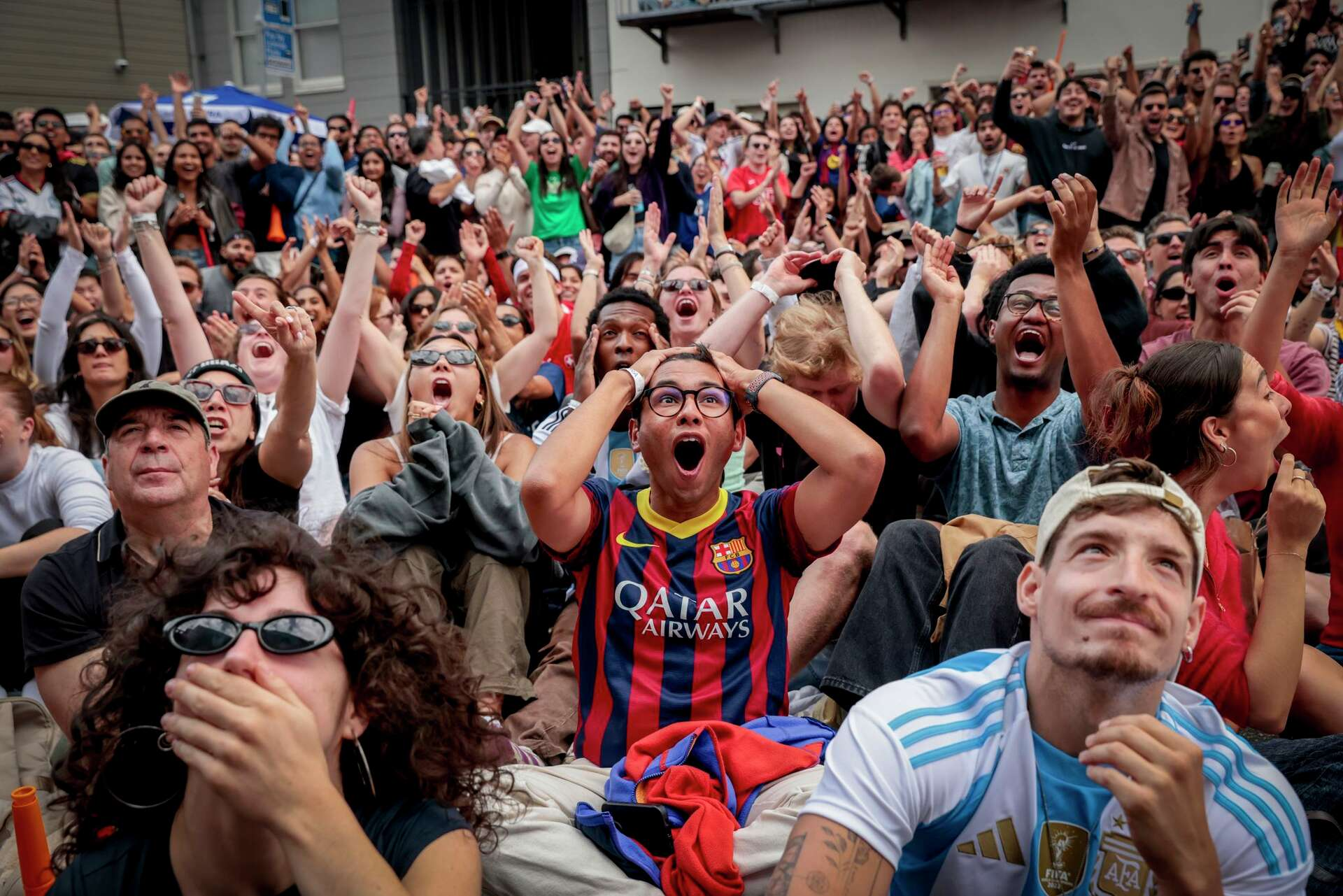
The activations that worked all started from attention that was already there. They found where it was gathering. In the ritual, the curiosity, the road trip, the heartbreak, and added something worth having. In a crowded moment, joining a fire beats striking your own match.
But underneath the tactics is the part I'd hold onto. Each winning bet assumed the people on the other end were capable of something. The bracelet assumed they wanted to participate. The covered logo assumed they were curious enough to finish a thought. The diner assumed they'd love it exactly as it was. The café assumed they could sit with their own grief and still show up. The celebrity blitz—the one that missed—assumed the opposite: that a familiar face could do the work character used to.
That divide cuts close if you raise money for a cause. Under pressure, our reflex is to assume less of people. To lean on the urgent ask, the guilt that reliably moves a gift, the story that shrinks a real person down to a need. It works, for a while. But you form donors into whatever you assume they are. Treat a donor as a checkbook that opens under enough alarm, and alarm becomes the only thing that moves them… until someone else's is louder. Treat them as people capable of conviction, and a few will carry your cause further than any campaign could.
Here's the question I'd leave you with: when your appeal reaches someone, what does it assume they're capable of? Transaction or conviction? Guilt or empathy? Fear or grace? They'll feel that answer long before your ask.