

Postage keeps climbing. Check usage keeps declining. And concerns about mail fraud aren’t going away. And while direct mail still works, we recognize that the environment in which it operates is changing.
Every year, we run more than a hundred direct mail tests across our full-service clients. Some are messaging shifts. Some are format tests. Some are format changes to the package itself.
One recurring question we’ve tested repeatedly:
Do QR codes actually improve performance in direct mail?
QR Code Testing
QR codes are no longer a novelty. They’re a habit.
Donors use them at restaurants, airports, and retail counters and even in church bulletins. The question isn’t whether people understand QR codes anymore. The question is whether adding them to direct mail meaningfully improves fundraising performance.
We tested a variety of QR code placements and messaging in our direct mail packages, with the aim to:
- Increase average gift size (online gift sizes often outperform mailed checks).
- Encourage multichannel engagement.
- Create optional digital pathways.
It's important to note that while gifts made via QR codes were included in the results, we did not conduct additional matchback analyses.
The Results
The short answer: QR codes are not a silver bullet.
In most tests, adding QR codes did not produce a statistically significant lift in response rate or average gift.
But there was quite a bit of learning about how to use QR codes effectively.
What Worked: Strategic QR Code Placement
The tests that showed improvement used QR codes intentionally rather than randomly.
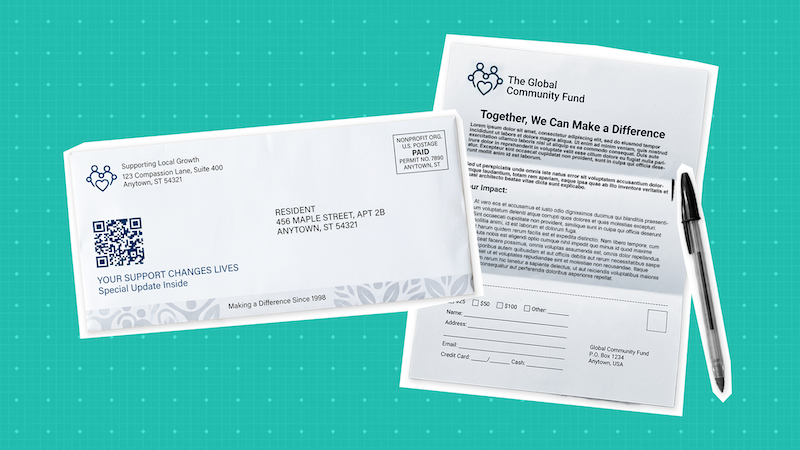
When the code appeared at multiple logical touchpoints (the outer envelope, the reply device, and near the letter signature), it reinforced the offer without competing with it. The QR code did not become a headline. Rather, it was a convenient response option woven into the package.
What Tied: Fancy QR Codes
We tested standard QR codes against stylized or “branded” versions. There was no statistical lift from making them prettier.
In a three-way test (no QR code vs. standard vs. fancy), the standard QR code performed best.
The likely reason? Recognition. Donors know what a basic QR code looks like. Over-designed versions can blend into the creative and lose their function.
What Tied: Adding, Not Replacing
When QR codes were added alongside the core offer elements, performance held steady.
If the reply device still included the essential messaging—such as the dollar handle, an upcoming deadline, the sense of urgency, and strong imagery—adding a QR code did not hurt the response.
The same was true in headlines. When the QR code supplemented the message rather than competed with it, results tied the control.
Where performance declined was when the QR code replaced something important. When urgent copy, compelling visuals, or key offer language were removed to “make room” for the QR code, response dropped.
The key takeaway: QR codes are a convenience feature—not the offer.
Add them, but don’t let them displace what actually drives response.
What Tied: Simplicity
Adding a QR code to the outer envelope with straightforward instructions—“Scan with your phone to give now”—did not hurt performance.
The problems started when we tried to do too much.
When additional offer copy or expanded messaging was layered around the QR code on the envelope, response rates declined.
A simple instruction worked.
An extra explanation didn’t.
Why Keep Using QR Codes?
Even without dramatic lifts, QR codes still matter.
Every donor who transitions from a mail-only relationship to a multichannel one increases in long-term value. QR codes won’t rescue a weak offer. But they do reduce friction for donors who prefer to give digitally.
One Final Caution
If you’re going to drive donors to mobile giving, your mobile experience must be excellent.
A clunky mobile page will erase any benefit a QR code creates. And remember that older donors are increasingly using smartphones, and usability matters even more to them.
You can read more about bridging the gap between mobile and donations here.