

According to the latest report from the Fundraising Effectiveness Project, nonprofits continued to face headwinds at the close of 2024. For the third year in a row, overall revenue was propped up not by broad-based donor growth, but by mid and major donors holding the line. The report put it bluntly: Q4 of 2024 “highlights the growing role of high-dollar donors in driving fundraising performance.”
Retention Is Still the Elephant in the Room
If you ask Google what a “normal” retention rate looks like, you’ll probably get a number between 35% and 45% based on various blogs and articles. In practice, that means most nonprofits are replacing more than half of their donor file every single year. And with cultivation costs increasing, that level of churn is not just inefficient—it’s unsustainable.
What the Benchmark Data Reveals
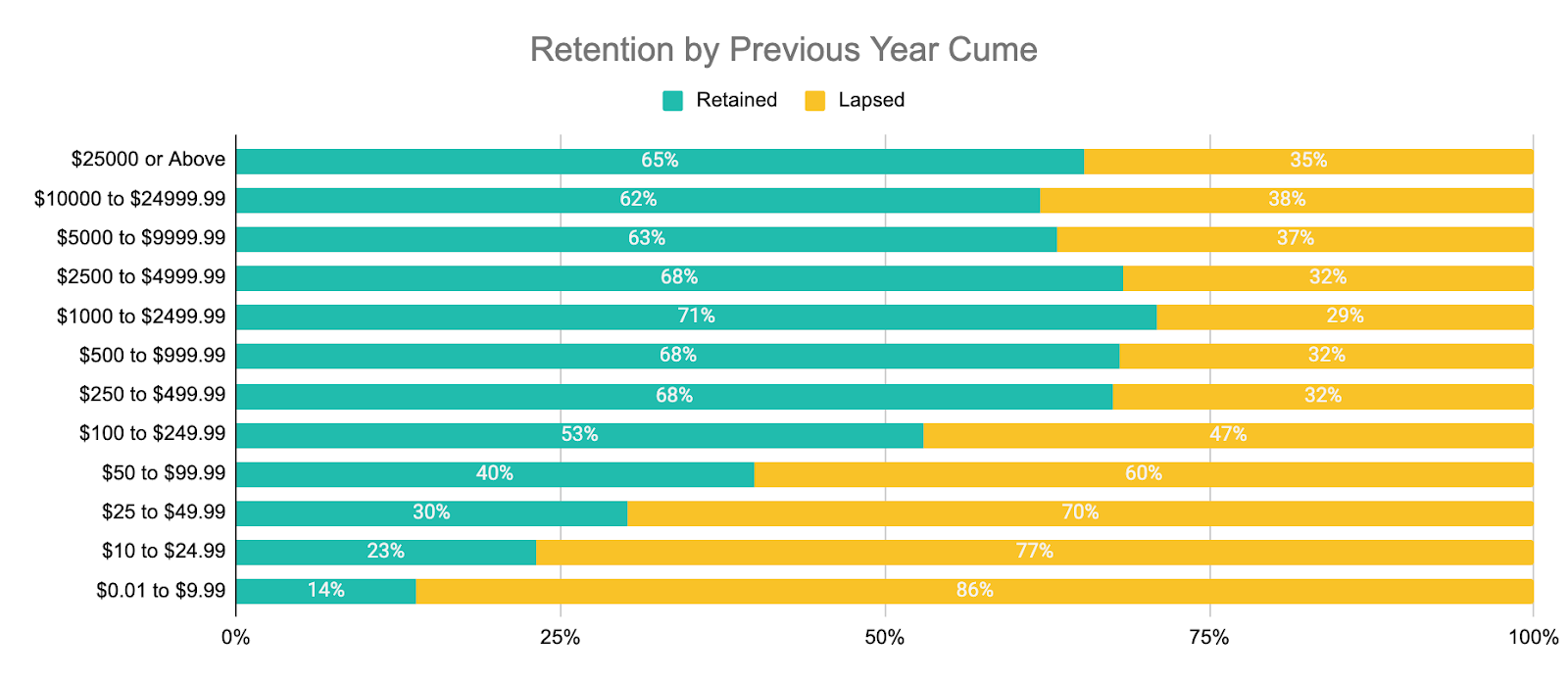
At Masterworks, we analyzed benchmark data from over 200 nonprofit organizations, looking at 2024 retention rates by prior-year cumulative giving level.
As expected, the lowest-value donors had the worst retention. These are supporters who likely:
- Were more impacted by inflation
- Signaled limited commitment through giving small amounts
- Received minimal cultivation by the organization to protect net revenue
The Real Surprise: Mid-Level Donor Retention
What stood out in the data was how low the retention rate was for donors giving $250 or more per year. Across Masterworks clients, we regularly see 75–80% retention in this segment. So, seeing widespread underperformance in this tier across the market was eye-opening.
This mid-value band is too important to lose. They’re not only high ROI donors, but also the feeder group for raising up major donors, yet many organizations are letting them quietly walk out the door.
Retention Goals Need to Be Value-Based
This is where data should drive strategy.
Retention metrics like these help inform where to invest in cultivation and where to rethink acquisition. If low-value donors don’t retain, we need to rethink our models and strategies that bring them on board. Instead, prioritize acquisition efforts that bring in higher-value donors from day one.
The shift from donor volume to donor value isn’t just a trend. It’s the new performance model.